Dubai Metro Blue Line: Five Checks for Property Buyers
Dubai’s Metro Blue Line adds a new dimension to a property search. Here are five checks covering access, timing, ownership costs, residents’ needs and pricing.
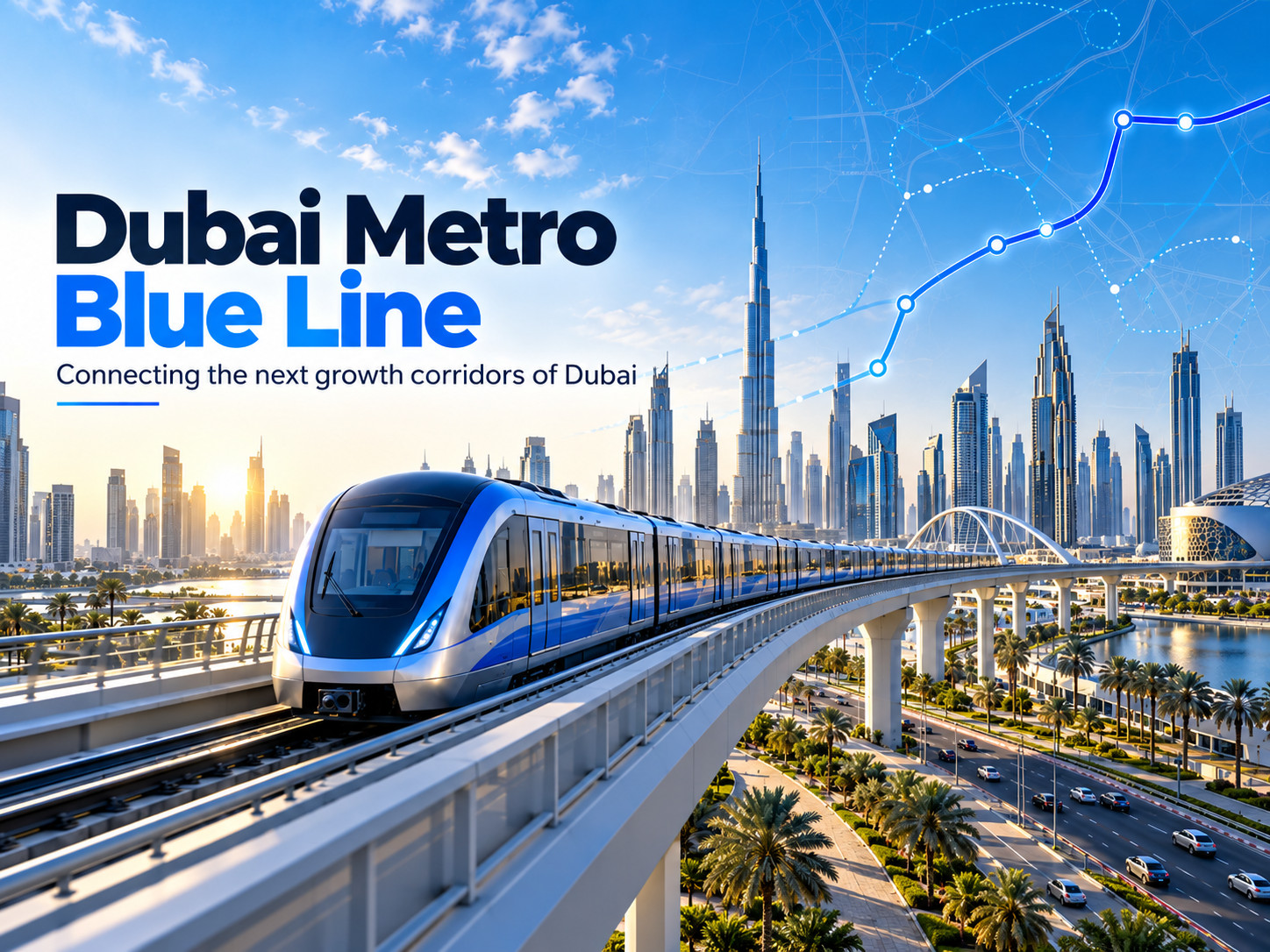
Dubai’s Metro Blue Line is bringing renewed attention to communities along its planned route. For anyone comparing homes or investment properties, it raises a practical question: how much should a future transport connection influence today’s purchase?
The answer starts with the individual property. A rail project can strengthen a location’s long-term appeal, while its usefulness to a particular household depends on the journey, the building, the budget and the timing.
What is officially confirmed?
In its announcement dated 3 May 2026, Dubai’s Roads and Transport Authority described the Blue Line as a 30-kilometre project with 14 stations, with an opening target of 9 September 2029. It will connect with the Green Line at Creek Station and the Red Line at Centrepoint Station.
The planned route serves areas including Dubai Creek Harbour, International City, Dubai Silicon Oasis, Dubai Academic City, Mirdif and Al Warqa’a. These project facts provide context for a property search; they do not establish a future sale price or rental return for any particular building.
Here are five checks to make before allowing the metro connection to influence a purchase.
1. Measure the journey from the building
An area name alone tells you little about everyday access. Ask which planned station would serve the property and what information confirms its location.
Then examine the practical route from the building: walking distance, road crossings, pavement access and any need for a bus or car connection. Check what has been officially confirmed about station entrances and surrounding access, and identify details that remain unresolved.
A useful comparison follows the entire journey from your front door to your destination. A short distance on a brochure map may still involve a complicated trip.
2. Match the timing to your own plans
The announced opening date is a future target. Consider how the property would work for you before that connection becomes available.
If you intend to move in soon, assess the commute and services available today. If you are considering a property under construction, examine its own expected handover alongside the transport timeline. Those are separate projects with separate delivery considerations.
Leave room in your plans for changes. A home should remain workable for your budget and daily routine if transport benefits arrive later than expected.
3. Check the full cost of ownership
Build a clear picture of the purchase price, transaction costs, financing where applicable, service charges and ongoing maintenance. For a rental investment, include realistic allowances for vacancy and other ownership expenses.
Use evidence from comparable properties when assessing potential rent. Ask how the figures change under a more conservative scenario, rather than relying on a future increase associated with the metro.
Transport improvements can form part of your assessment. The purchase should also have a clear financial explanation using the property’s condition, costs and evidence available today.
4. Consider who would actually live there
Start with the needs of the intended resident. Would the route help with their workplace, university or regular journeys? How much of their travel would still require a car?
For your own home, consider schools, shops, healthcare, parking, layout and the wider neighbourhood. For an investment, think carefully about the type of tenant the property could suit and check that assumption against local evidence.
Good connectivity is most useful when it supports the lifestyle of the person using it. The right unit and building remain part of that decision.
5. Compare the asking price with the evidence
Ask whether the seller’s price already includes a premium for future transport access. Compare the property with similar units, accounting for building quality, size, condition and current accessibility.
Where possible, examine completed transactions and achieved rents alongside asking prices. Treat predictions about future appreciation as forecasts, and ask what assumptions support them.
A confirmed infrastructure project gives you a reason to investigate a location. Your comparison should explain what you are paying for at the level of the specific property.
JSR Properties’ view
The Blue Line gives buyers a useful reason to revisit how connected different communities could become. Our approach is to assess that opportunity alongside the property’s current strengths, practical access, ownership costs and the buyer’s timeframe.
If you are comparing homes along the planned route, speak with JSR Properties about the locations, buildings and questions relevant to your search.
Sources checked on 15 October 2026:
RTA — Mohammed bin Rashid launches tunnelling works for Dubai Metro Blue Line, 3 May 2026:
https://www.rta.ae/wps/portal/rta/ae/home/news-and-media/all-news/NewsDetails/mohammed-bin-rashid-launches-tunnelling-works-for-dubai-metro-blue-line
RTA — About Dubai Metro, Blue Line project overview:
https://www.rta.ae/wps/portal/rta/ae/public-transport/metro/about-metro